Polar Vs Nonpolar Covalent Bonds Examples
Non-polar bonds are also a type of covalent bond. Usually covalent bonds formed between the two nonmetals between p-block and p-block and formed when electronegativity difference between atoms exist less than 17.

Polar And Nonpolar Covalent Bonds Definitions And Examples Video Lesson Transcript Study Com
Nonpolar molecules are hydrophobic.
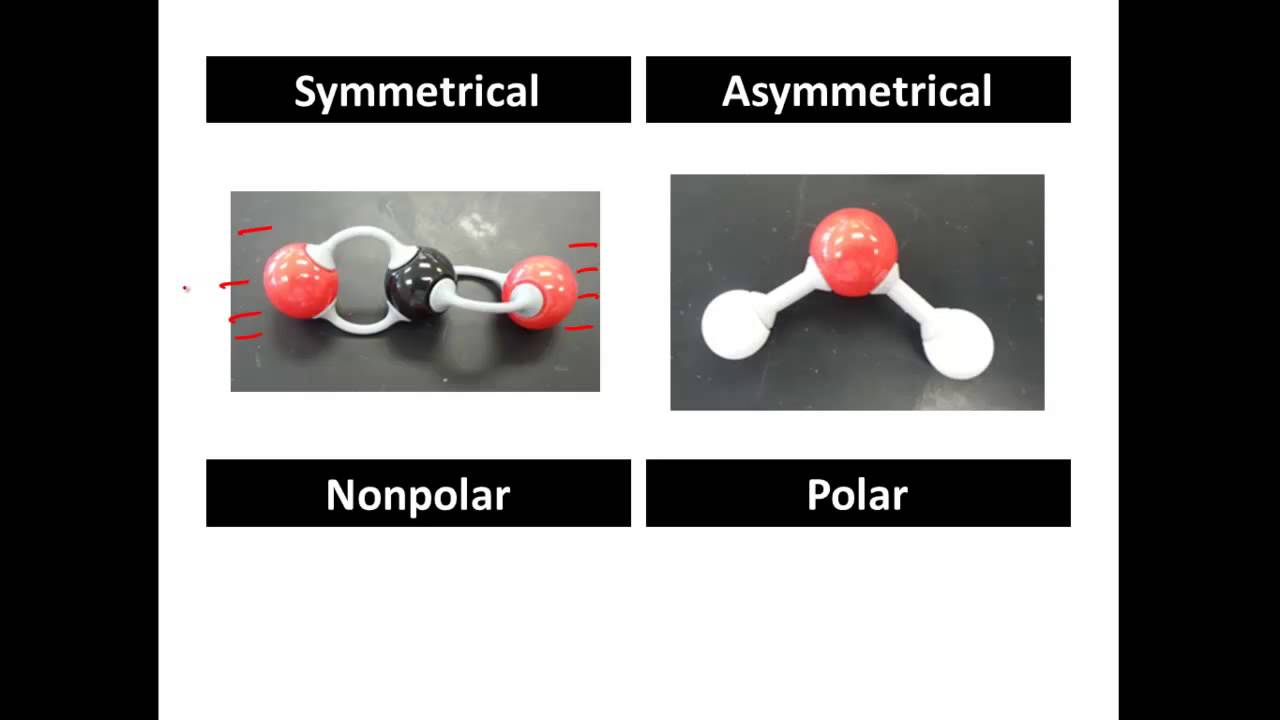
Polar vs nonpolar covalent bonds examples. A polar molecule always contains polar bonds but some molecules with polar bonds are nonpolar. Solvents can cause considerable confusion in reactions because theyre listed along with the reagents of a reaction but often dont actually. A covalent bond that has an equal sharing of electrons part a of Figure PageIndex1 is called a nonpolar covalent bond.
About Solvents In Organic Chemistry A lot of students I talk to have questions about solvents so Ive decided to put together a reference post on them. Unlike polar bonds non-polar bonds share electrons equally. An extreme difference forms an ionic bond while a lesser.
This happens when there is a difference between the electronegativity values of each atom. Only when two atoms of the same element form a covalent bond are the shared electrons actually shared equally between the atoms. B The fluorine atom attracts the.
Polar molecules occur when two atoms do not share electrons equally in a covalent bondA dipole forms with part of the molecule carrying a slight positive charge and the other part carrying a slight negative charge. These molecules have nonpolar covalent bonds or polar covalent bonds both of which share. Sharing of electrons allows the atoms to obtain the stable outer electron shell configuration.
A covalent bond that has an equal sharing of electrons and the electronegativity difference is zero is called a nonpolar covalent bond. For many molecules the sharing of electrons allows each atom to attain the equivalent of a full valence. Figure 230 A has additional examples of single bonds.
Not all hydrogen bonds have the same strength it depends on the electronegativity of the atom it is bonded to. Obviously H 2 O is a polar covalent compound because the difference of electronegativity between hydrogen and oxygen is 12 hence unequal sharing of electrons occurs between these atoms. For example tetrachloro-methane carbon tetrachloride CCl 4 has polar CCl bonds but the tetrahedral arrangement of the four bonds about the central carbon atom causes the individual bond moments to cancel.
A covalent bond with an equal share of electrons and an electronegativity difference of zero is called a nonpolar covalent bond. Cancellation depends on the shape of the molecule or Stereochemistry and the orientation of the polar bonds. Sometimes two covalent bonds are formed between two atoms by each atom sharing two electrons for a total of four shared electrons.
For example in the formation of the oxygen molecule each atom of oxygen forms two bonds to the other oxygen atom producing the molecule O 2. When hydrogen is bonded to fluorine the bond is very strong when bonded with chlorine it has moderate strength and when bonded with another hydrogen. Hydro- means water and -phobic means fear.
Different ways of representing the polar sharing of electrons in a water molecule. Also oxygen is more electronegative than hydrogen hence it attracts more electrons towards. When atoms of different elements share electrons through covalent bonding the electron will be drawn more toward the atom with the higher e lectronegativity resulting in a polar covalent bond.
Polar is a type of covalent bond where atoms share electrons unequally. Thats the short answer to polar vs nonpolar. A covalent bond is a chemical bond that involves the sharing of electron pairs between atomsThese electron pairs are known as shared pairs or bonding pairs and the stable balance of attractive and repulsive forces between atoms when they share electrons is known as covalent bonding.
Nonpolar is a type of covalent bond where atoms share electrons equally. Atoms have a variety of bonds that affect whether and how they share electrons. Technically nonpolar bonding only occurs when the atoms are identical to each other eg H 2 gas but chemists consider any bond between atoms with a difference in electronegativity less than 04 to be a.
This represents a polar covalent bond in which the electrons are shared unequally. Examples of some compounds that form covalent bonds H 2 O NH 3 H 2 S SO 2 NO 2 AlCl 3 etc. Read on for a deep dive into polar vs nonpolar.
So Is H 2 O a polar covalent or nonpolar covalent compound. Dipole moments are generally found in Polar Covalent Bonds. In part c the polar covalent bonds are shown as electron dots shared by the oxygen and hydrogen atoms.
A molecule in which the bond dipoles present do not cancel each other out and thus results in a molecular dipolesee below. In the case of covalent bond formation polyatomic ions are formed. A non-polar molecule has a structure of its atoms lined up in a way that the orbital electrons in the outer region cancel out the electronegativity.
However a molecule may be polar or nonpolar depending on its geometry. Atoms of different or same elements come together to form molecules. Examples of hydrophilic compounds include sodium chloride ionic and glucose polar covalent.
Polar Molecules. Examples of Polar and Non-Polar Molecules A molecule may be polar or non-polar. In a b the polar covalent bonds are shown as lines.
A The electrons in the covalent bond are equally shared by both hydrogen atoms. Nonpolar molecule are water fearing and do not easily dissolve in water. Different atoms show attraction to electrons in various degrees.
What is the total number of sigma and pi bonds in c2h2 and c2h4. A bond between two atoms or more atoms is non-polar if the atoms have the same electronegativity or a difference in electronegativities that is less than 04. The bonding electrons in polar covalent bonds are not shared equally and a bond moment results.
Figure PageIndex1 Polar versus Nonpolar Covalent Bonds. Polar bonds are the dividing line between pure covalent bonding and pure ionic bondingPure covalent bonds nonpolar covalent bonds share electron pairs equally between atoms. Nitrogen N2 hydrogen H2 water H2O ammonia NH3 chlorine Cl2 fluorine F2 are some of the examples of the compounds having covalent bonds.
Covalent bonding occurs between two non-metallic atoms characterized by the sharing of electron pairs between the atoms and other covalent bonds with electronegativity difference is greater than 20. Polar Protic vs Polar Aprotic vs Nonpolar. This is a nonpolar covalent bond.
A covalent bond with an unequal sharing of electrons and the electronegativity difference within the range of 01-2 is called a polar covalent bond. Learn about polar and nonpolar covalent bonds through examples and explore peptide bonds electronegativity and. Polar Covalent Bond When the electrons spend more time around the more non-metallic atom the sharing of the electron pair becomes unequal and results in the formation of polar covalent bonds.
The bond which is formed by sharing a pair of electrons between two atoms is called a Covalent Bond. Main Difference Polar vs Nonpolar Molecules. Water does not dissolve nonpolar covalent compounds which include hydrocarbons such as.
In general pyramid-shaped and V-shaped molecules are said to be polar. When compared to ionic compounds covalent. An example of a non-polar bond is the bond in chlorine.
Each diagram shows the unsymmetrical shape of the water molecule.

Difference Between Polar And Nonpolar Molecules Definition Formation Properties Examples Covalent Bonding Study Chemistry Chemical Bond

Difference Between Chemistry Classroom Teaching Chemistry Chemistry Lessons

How Do Molecular Compounds Bond Example Hydrogen Bond Bond Covalent Bonding

Lewis Structures Introduction Formal Charge Molecular Geometry Resonance Polar Or Nonpolar Youtube Molecular Geometry Chemistry Covalent Bonding

Polar And Nonpolar Molecules Covalent Bonding Chemistry Lessons Molecules

Definition And Examples Of A Polar Bond In Chemistry Covalent Bonding Chemical Bond Chemistry

Chemistry Intermolecular Forces Polar Bonds And Polarity Chemistry Classroom Teaching Chemistry Chemistry Education

About The Mcat Mcat Chemistry Chemical Reactions Ciencias Quimica Quimica Cine En Casa

Polar Vs Nonpolar Covalent Bonding Medical Student Study Science Chemistry

Hf Is Polar Or Nonpolar Covalent Bond Covalent Bonding Polar Molecules

Demo Start Covalent Bonding Polar Flow Chart


Bonding Covalent And Ionic Bonds Shmoop Chemistry Covalent Bonding Ionic Bonding Chemistry

Polar Covalent Bonds The Water Love Story Youtube Covalent Bonding Apologia Chemistry Science Chemistry
Polar And Non Polar Covalent Molecules Polar Vs Nonpolar Youtube Playlist Science Chemistry Molecules Chemistry

Pin On Science

Why Is Water A Polar Molecule Water Molecule Polarity Of Water Covalent Bonding

Polar Covalent Bonds Covalent Bonding Teaching Chemistry Chemistry Help

Biology Polar Vs Nonpolar Bonds Expii Teaching Chemistry Chemistry Quotes Chemistry Education